When do you actually need an advertising agency?
It depends on what kind of mess you’re in. 😉
I’ve spent most of my career in advertising.
I’ve worked at big agencies. Small agencies. As a freelancer. Inside companies. And for the last five years, I’ve run Agency SOS, a deliberately small advertising agency built around a pretty simple idea:
Build the team around the problem instead of making the problem fit the agency.
Five years in, I’ve learned something that may not be the greatest sales pitch for a guy who owns an agency:
You don’t always need an agency.
But there’s a particular kind of marketing problem I’ve become increasingly interested in.
It usually starts with a sentence like: “Something isn’t working the way it should.”
Our positioning doesn’t differentiate us.
Our brand doesn’t reflect the company we’ve become.
We’re launching something new and aren’t sure how to explain it.
Our advertising has gotten stale.
We’re spending a lot on media but aren’t sure we’re getting enough out of it.
Our internal team is good, but stretched.
Or sometimes it’s simply: “I know we need to do something. I’m just not sure what.”
That last one is actually a big part of why I called the agency “Agency SOS.”
I wanted it to be a resource for people who lead brands and marketing teams. A place to bring a problem—or an opportunity—even if you don’t know exactly what kind of help you need yet.
That’s why one of the things I say to people all the time is: Let’s just jump on a call and talk about the problem.
Maybe Agency SOS can help. And if we’re not the right fit, I can probably help point you toward someone who is.
That’s the larger promise behind SOS: Help for people who build brands.
The goal isn’t necessarily to turn every conversation into an Agency SOS assignment. It’s to help you figure out what to do next.
Sometimes the thing you think you need isn’t the thing you actually need.
You think you need a new campaign. But before you make the campaign, you realize the positioning needs work.
You think you need a brand refresh. But the bigger opportunity is to create a more useful identity system that can live everywhere your brand does.
You think you need better advertising. But nobody has taken a fresh look at the media strategy in years.
You think you need a new website. But rewriting the website forces a bigger question: What does this company actually want to say about itself?
That’s where things get interesting.
Instead of starting with a predetermined team and a menu of agency capabilities, start with the problem.
Then figure out what kind of help it actually requires.
Sometimes you need to figure something out.
Sometimes you need to launch something.
Sometimes you need to transform something.
Sometimes you need to make the whole marketing operation work better.
Here are four examples where we did just that…
Kodak Moments: Figure it out.
Kodak Moments came to us with a complicated brand problem.
There were multiple products and initiatives, different audiences, and a famous master brand that brought enormous recognition—but also expectations and associations accumulated over more than a century.
The question wasn’t simply, “What should the advertising say?” It was more fundamental.
How should all these pieces fit together? What role should the master brand play? What was the larger story connecting the products and experiences? And how could that strategy eventually translate into something consumers would care about?
So before we started making things, we helped untangle the problem.
We worked through the portfolio, developed a clearer master-brand strategy and narrative, and then helped translate that thinking into creative direction.
That’s an important kind of agency assignment that doesn’t always end up in a portfolio.
Sometimes the most valuable thing you can make is clarity. (It also led to a pretty great campaign.)
ElementAL: Launch it.
ElementAL was almost the opposite problem.
Instead of a famous brand with decades of history, this was something new: wine in a lightweight, infinitely recyclable aluminum bottle.
Interesting product. Interesting sustainability story.
But new things create their own marketing challenges. What exactly are we selling?
Is this primarily a better package? A sustainability innovation? A new kind of wine brand? Why should someone care? And how do you make something unfamiliar feel desirable rather than strange?
There wasn’t an established playbook to follow.
So we built the team the problem required, developed the positioning and creative platform, and helped turn a product innovation into something consumers could understand and get excited about. (See the campaign.)
You need a handful of experienced people who can figure out the opportunity—and then bring in the right additional talent to make it real.
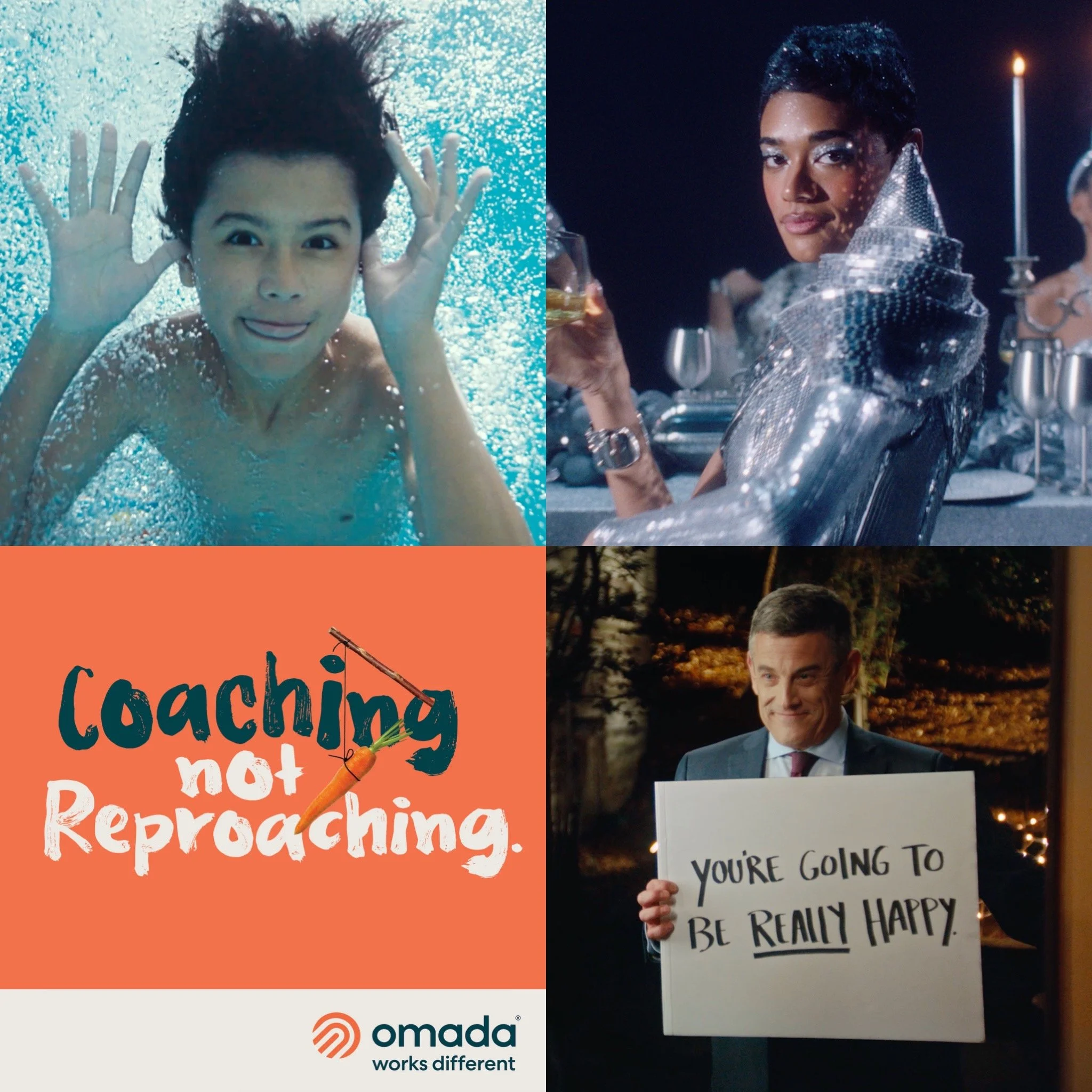
Omada Health: Transform it.
Our relationship with Omada Health started with marketing and advertising work.
But Omada itself was evolving.
The company had grown well beyond its startup years. Its story was becoming bigger. Its ambitions were bigger. And as the company moved toward its next stage—including preparing for an eventual IPO—it needed a brand that could tell a deeper story about what Omada had become.
That wasn’t just an advertising problem.
We helped refresh and substantially expand Omada’s brand guide, creating a richer visual system that felt more alive, more human and better suited to the company it had become.
And the gratifying part is what happened next. The identity didn’t stay inside the brand guide.
It spread.
Into advertising and email marketing. Into the digital experience. Into the UX of the Omada app. Into events and trade shows. Into the workplace. Into the everyday ways the company presents itself to members, customers, employees and the world.
That’s one of my favorite kinds of brand work. Not a new logo that gets unveiled with great fanfare. Not a PDF that sits on somebody’s desktop. A system that gives an organization more ways to express who it is—and actually gets used.
We’re doing something similar right now for an established SaaS company in a crowded category.
The work has taken us upstream into positioning and messaging and downstream into rewriting the website, developing the company’s first comprehensive brand guide, and expanding its visual identity.
Different company. Different category.
But a similar moment: The business has evolved faster than the way the brand talks about itself.
Trantolo & Trantolo: Run it better.
Our work with Trantolo & Trantolo is a different kind of example.
They’re a personal injury law firm that’s been around for more than 85 years. They were already a significant advertiser when we started working together.
The assignment wasn’t to invent the company from scratch. It was to bring a fresh perspective to how an established regional brand goes to market.
That meant new creative. (Some of it VERY different for the category.) But it also meant media.
When Agency SOS became the firm’s agency of record, we took a fresh look at essentially every aspect of the creative and media strategy: where the money was going, how different channels were working together, what role different creative should play, and how the entire investment could work harder.
Today, a very small Agency SOS team helps manage a surprisingly complicated marketing operation:
More than 200 creative executions.
10 media channels.
$5 million in annual media.
We brought experience working on national brands to a regional advertiser—but without trying to turn them into something they’re not.
And the business result matters more than the volume of work.
So far this year, with essentially flat media spending, the new creative and media strategy has helped generate more than a 25% increase in signed cases.
Twenty-five percent more signed cases without spending 25% more on media. That’s the kind of transformation I care about. Not change for the sake of change.
Make the marketing work better.
Four clients. Four very different problems.
Kodak Moments needed help figuring it out.
ElementAL needed help launching it.
Omada needed help transforming it.
Trantolo & Trantolo needed someone to run it better.
None of them needed exactly the same agency. So we didn’t give them one.
The strategist who’s perfect for one problem isn’t necessarily right for another. Neither is the writer, art director, designer, production company, media planner or digital specialist.
We built a different team around each problem.
That’s exactly why I started Agency SOS in 2021.
I’d spent decades working inside traditional agencies, and I knew there were a lot of things the agency model did extraordinarily well.
But I’d also seen the machinery that comes with it.
Large permanent staffs. Departments that need to be utilized. Teams assembled around account structures. Clients sometimes paying for resources they don’t really need because that’s how the agency is built.
I wondered if you could reverse the equation.
Don’t start with the agency.
Start with the problem.
Small doesn’t have to mean small assignments.
When I started Agency SOS, I used the phrase “seasoned ad agency strike team.”
I still think it’s a pretty good description.
The idea was never to build a miniature version of a traditional agency. It was to strip away some of the assumptions about what an agency has to be.
You don’t necessarily need 30 people assigned to your business to solve a complicated problem. You need the right people.
You don’t necessarily need every capability permanently sitting inside one company. You need access to the right capabilities when the problem requires them.
And you shouldn’t have to pay for a giant standing infrastructure just in case you might need it someday.
Trantolo has probably been the best stress test of that idea. A $5 million media budget. Ten channels. Hundreds of pieces of creative. Constant production and optimization.
That’s not a tiny marketing assignment.
It’s just being handled by a tiny core team.
Small doesn’t have to describe the size of the problem.
It can describe the amount of machinery you put between the person who has the problem and the people actually solving it.
So when do you actually need an agency?
After many years of doing this, here’s roughly how I think about it:
Hire a freelancer when you know what needs to be done and need a talented person to execute it.
Hire a specialist when the problem requires deep expertise in one particular discipline.
Build the capability internally when the need is constant and being embedded in the organization matters.
Hire a large agency when scale, global infrastructure, enormous production volume or deep permanent resources are genuinely essential.
And consider a small, senior agency when the problem is important, somewhat messy, crosses disciplines, and may change as you get deeper into it.
Especially when you’re at a moment of change…
Your company has outgrown its positioning.
Your brand needs to catch up with your business.
You’re bringing something new into the world.
Your advertising isn’t performing the way it should.
Your media plan needs fresh eyes.
You’re spending significant money but aren’t convinced it’s working hard enough.
Or you just have that nagging feeling: We need to do something. I’m just not sure what.
Those are my favorite conversations.
Because sometimes you don’t need an army. You don’t even necessarily need an agency.
You just need a few experienced people willing to sit down with you, figure out what the problem really is, and help you decide what to do next.
And if that means Agency SOS can help, great. If it means I can point you toward somebody who can, that’s good too.
That’s what the SOS is there for.
— John Kovacevich, Creative Director & Founder of Agency SOS
Our clients agree…
"I loved working with John and the SOS team. They really helped us focus the brief and then developed a wide range of creative ideas to explore different strategies, tones, and executions. The team was collaborative and fun to work with and we were very happy with the resulting campaign. We got big agency thinking at a small agency price."
— Onita Mihaly, Senior Director of Brand Marketing, Ooma
"SOS was a terrific partner, helping us refresh our strategic platform and redefine how consumers experience our brand. They are an absolute pleasure to work with—smart, organized and best of all fun."
— Charlie Byron, Senior Director Brand Marketing, Omada Health
"Agency SOS is aptly named...when we needed urgent help on a tight turnaround for a new product launch, John and the SOS crew delivered. Great creative thinking, quality work, and super collaborative with our extended marketing team. A pleasure to work with."
— Jordan S., VP of Creative, Grove Collaborative
“Agency SOS provided us with exactly what we needed. They assembled a bespoke team befitting our project. They collaborated seamlessly with our brand team and PR agency to develop our messaging. They stayed within the confines of our pre-determined media and production budgets and gave life to a campaign that punched significantly above our weight.”
— Paul Englert, VP of Marketing, Bogle Family Wine Collection
"I would definitely recommend Brand Strategy Bootcamp to any Marketing Director or management who needs to take a deep dive into the brand’s deliverables. It sounds like an overwhelming task, but the Agency SOS team break it down into really manageable weekly topics. When you walk away, you’ve found your brand’s white space and have an invaluable library of marketing information about your own brand!"
— Amy Piccoli, Director of Marketing, Trantolo & Trantolo
“The most strategic and collaborative creative partner I have ever worked with. A true partner to the business who not only delivers best-in-class creative, but passionately works through your business challenges and your creative strategy with you every step of the way.”
— Kate Guthrie Adams, Sr. Marketing Director, Black Forest & Fruit Snacks Portfolio @ Ferrara
“I was incredibly impressed with John and team at SOS. We needed good ideas crazy fast and they went above and beyond. They unlocked the unique nature of our brand and delivered multiple digital-first creative concepts. Our team had a hard time picking our favorite. Would recommend SOS if you're looking for smart, focused creative thinking (and fast!)”
— Miguel Leal, Founder & CEO, SOMOS Foods
